Projects
Each of these projects is an exploration—of creativity, play, and the ways we engage with the world and each other. Some emerged from personal curiosity and as part of my studies, others in the context of my work and through collaborations with stakeholders. They all reflect my ongoing interest in design as a tool for learning, connection, and change.
Portfolio
My projects are context-based, developed in collaboration with local stakeholders, and guided by the principles of learning through play1, meaningful participation2, and design with children and young people's rights in mind3.
Pillar I
Pillar I
Afterschool care
A safe and stimulating experience for children to explore, play, and learn through thoughtfully designed activities that promote creativity and well-being, in the safety of their home.
Design strategy
Collaborative design strategies tailored for organizations seeking to create meaningful engagement through programs, spaces, or initiatives that prioritize children’s needs and creativity by integrating research, design thinking, and child-centered approaches.
Pillar I
Design strategy
Collaborative design strategies tailored for organizations seeking to create meaningful engagement through programs, spaces, or initiatives that prioritize children’s needs and creativity by integrating research, design thinking, and child-centered approaches.
Portfolio
My projects are context-based, developed in collaboration with local stakeholders, and guided by the principles of learning through play1, meaningful participation2, and design with children and young people's rights in mind3.

Playful struggles
Co-created with Vivita members aged 9 to 12, this card game introduces them to the design thinking process. With a mix of creative mindset cards, question prompts, and disruptive bonus cards, it encourages brainstorming, teamwork, and problem-solving. Designed as both a game and a facilitation tool, these playing cards support any team in exploring ideas, planning projects, and prototyping in an open-ended, collaborative way. Read more →

Vabamänguala
Or, free play area in Estonian, was a public space intervention during the Future is Now urban festival in Tallinn, developed for Vivita Estonia. It enabled children to engage in free, unstructured play—essential for developing creativity, problem-solving, and social skills. By creating a temporary environment that encouraged curiosity and independence through loose parts play, the project advocated for play in public space as a fundamental right of childhood. Read more →
Design for play
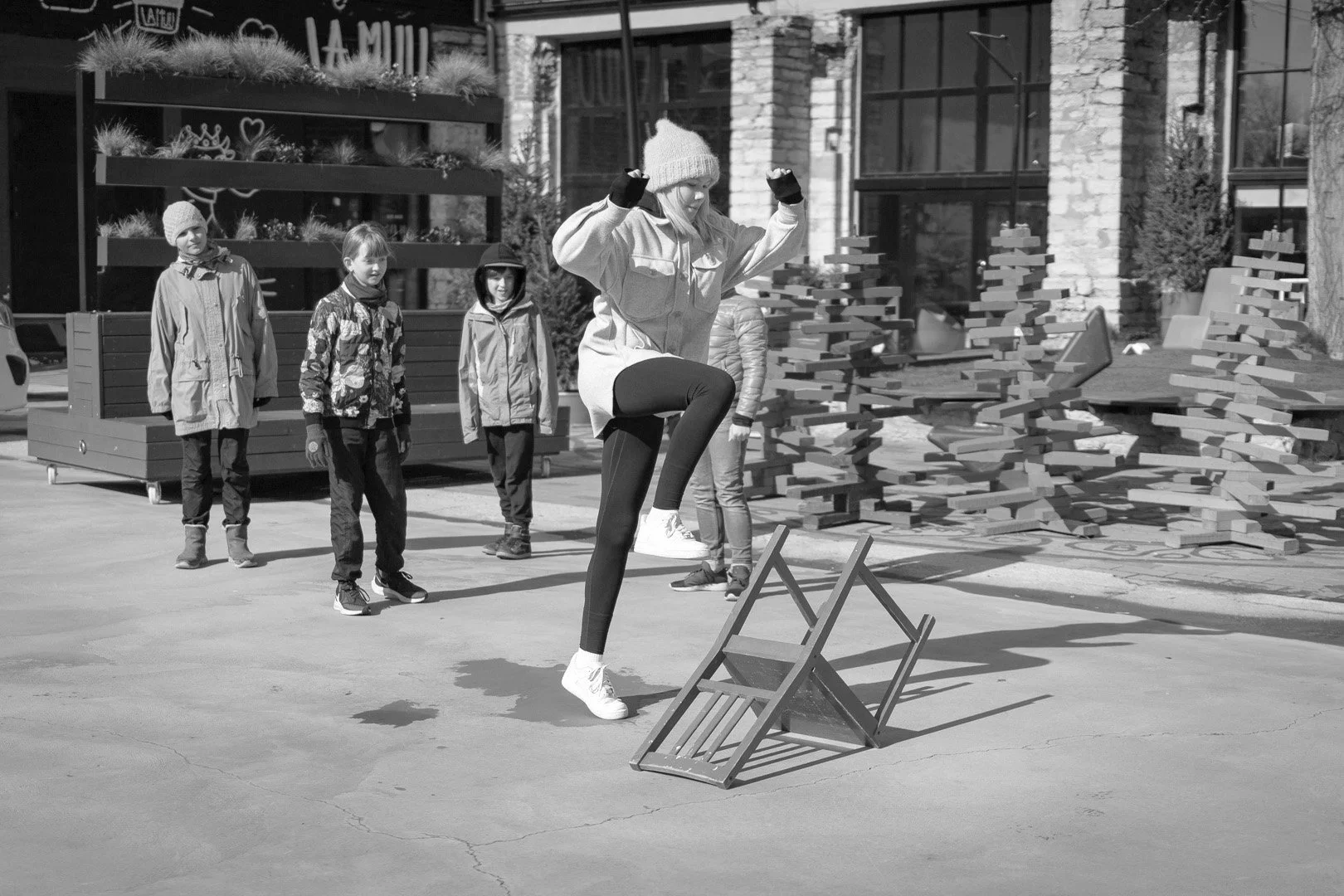
As part of the team of Vivita Estonia, I helped design and facilitate workshops based on free choice, open-ended exploration, joy, and collaboration. Relying on play as a vehicle to encourage children to ideate, test concepts, and collaborate on creative projects. Blending hands-on making with creative problem-solving created a dynamic environment where learning happened naturally. Read more →

Urban wildness
My graduation project in social design at the University of Applied Arts Vienna explored the relationship between nature and the built environment, inviting children and their parents to experience the wild in everyday urban spaces. The project framed marginal, untamed nature as an experimental playground to promote play, curiosity, and a deeper connection with the natural world, even in the heart of the metropolis. Read more →